
Learning to read is one of the most important milestones in a child’s early education and it starts right from the Early Years Foundation Stage (EYFS). At this stage, children are introduced to the sounds that letters make – known as phonics – before they begin recognising whole words. Rather than focusing only on letter names, children are taught to listen for and say the sounds in words, which helps them blend these sounds together to read. Fun, hands-on activities like sound-matching games, letter tracing, and using visual aids (like flashcards and picture books) make this learning exciting and memorable. As children build confidence, they move on to reading simple, decodable books that match their developing phonics knowledge. At the same time, they begin to learn sight words – common words like the, was and said – which don’t always follow phonetic rules but appear frequently in early reading books.
As reading develops, children are supported to become fluent – reading with ease, expression and understanding. In school, we model fluent reading, engage pupils in regular reading practice and help them to explore the meaning behind what they read. Parents play a vital role too: reading aloud at home, talking about books and encouraging daily reading helps children to develop comprehension and confidence. As children progress into Key Stage 1 and then into Key Stage 2, the focus shifts to building deeper understanding and a love of reading. We introduce a wide variety of rich and inspiring texts – from engaging stories to thought-provoking non-fiction – designed to challenge young minds and broaden vocabulary. Carefully chosen books help pupils to connect with characters, explore big ideas and think critically. When reading becomes part of daily life – through bedtime stories, library visits, or just talking about books – children become not just capable readers, but passionate, lifelong ones. As their skills grow, so too does their ability to engage with stories on a deeper level – not just decoding words, but feeling, imagining and questioning as they read.
This is where reading becomes something more than a skill – it becomes an experience. Books begin to open doors to new ideas and places, encouraging empathy, curiosity and imagination. Stories are truly extraordinary; they transport us to far-off lands, introduce us to unforgettable characters and allow us to live countless lives through the turn of a page. With a book in hand, children can travel the globe, explore the mysteries of space, or dive into the deepest oceans – all without leaving the comfort of school or home. Reading not only feeds the imagination but also expands a child’s understanding of the world and how they relate to it. It’s an essential tool for making sense of both the familiar and the unknown.
In the Prep School, our goal is not just to teach pupils how to read, but to help them fall in love with reading. One way we do this is by sharing stories that have touched us as educators – books that captivate, challenge and stay with pupils long after the final page. Below, our teaching staff have each chosen a favourite book for the age group they teach. Whether you’re looking for a new bedtime favourite, a classroom classic or a story to spark meaningful conversations at home, these recommendations are a great place to start!
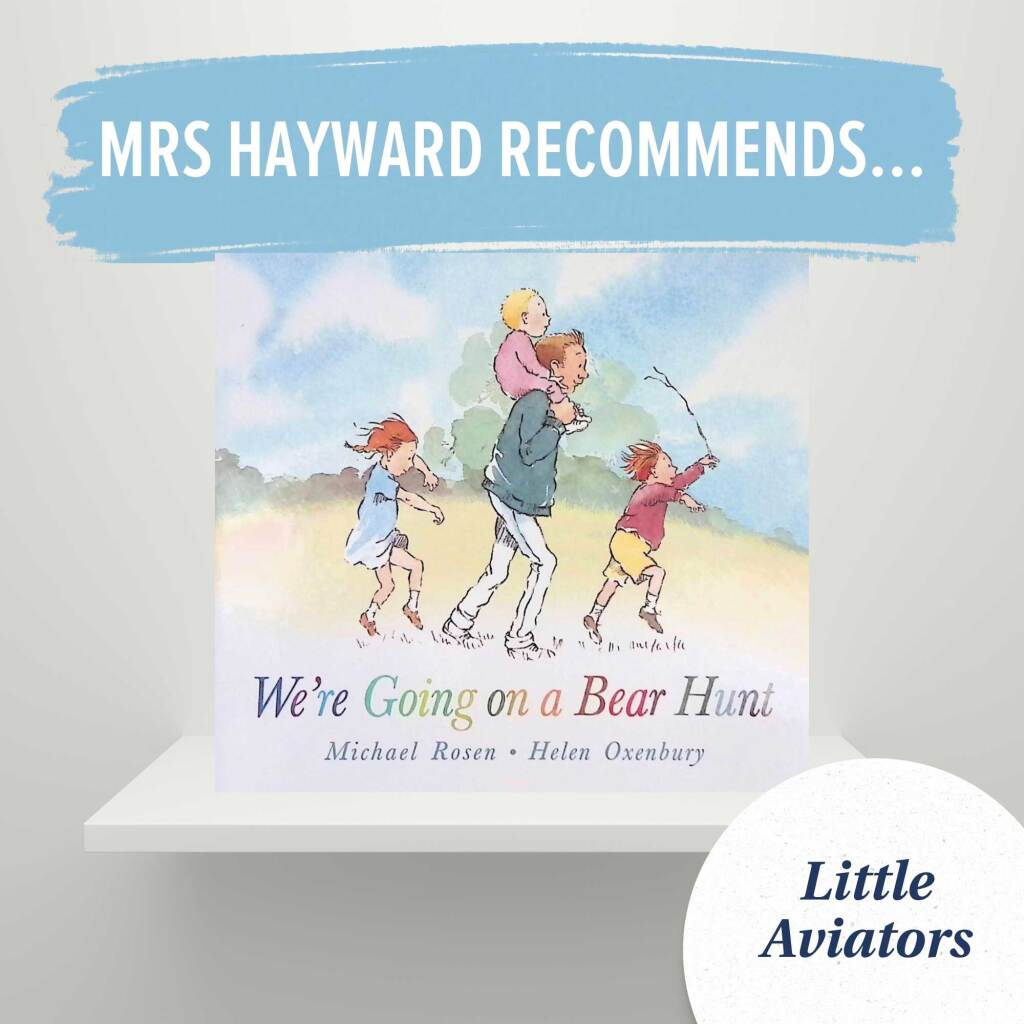
Little Aviators – Mrs Hayward recommends ‘We’re going on a Bear Hunt’ by Michael Rosen
This book is a big favourite in Early Years! The children love the repetitive language and phrases they can join in with. The story follows a family’s journey as they bravely face various obstacles while searching for a bear. My favourite part is the ending when they rush back to their house and run back down the stairs to shut the door from the bear, before hiding under the covers!
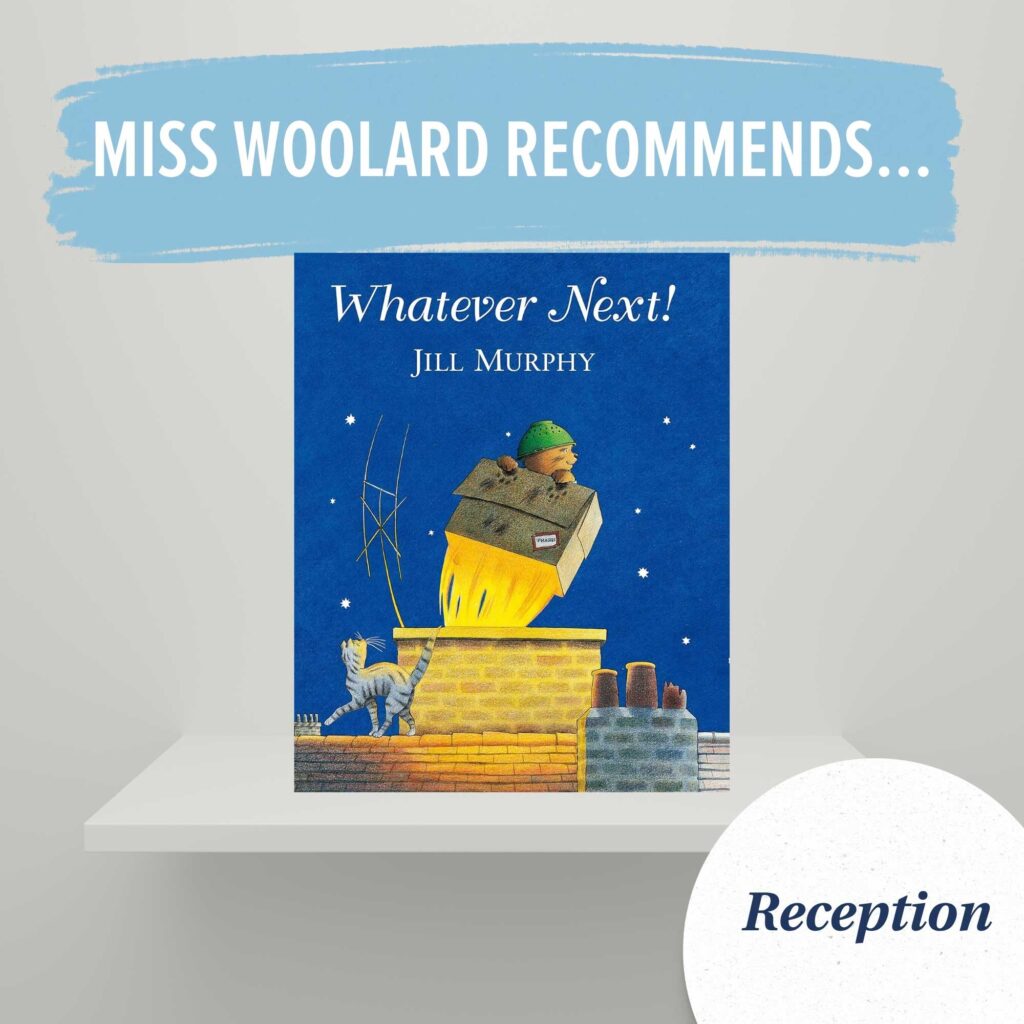
Reception – Miss Woolard recommends ‘Whatever Next!’ by Jill Murphy
This is a classic story about a teddy bear who wants to fly to space! The book encourages children to use their imaginations and can be linked to literacy, art and design and technology lessons. The simple plot allows for familiarity, so children can enjoy retelling the story – a key skill in the Reception curriculum. The book often prompts questions and interesting discussions about space and what lies beyond our planet.
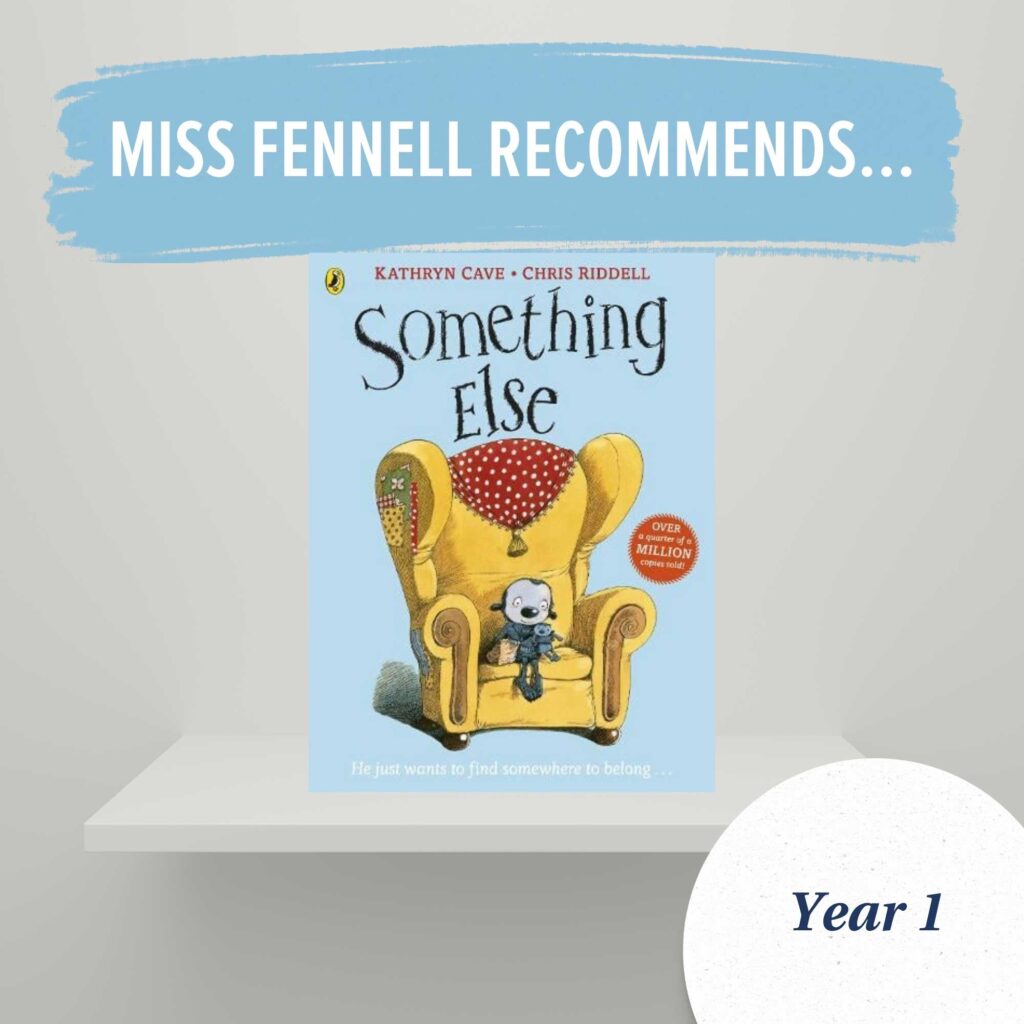
Year 1 – Miss Fennell recommends ‘Something Else’ by Katherine Cave and Chris Riddell
This is an incredible picture book, all about inclusion, bullying and embracing diversity. It’s the story of a creature, referred to as ‘Something Else’ by his peers, due to his difference in behaviours, appearance and the way in which he approaches life. We see him treat others differently, through learnt behaviour, before breaking the cycle and embracing his differences and thus becoming a happy and inclusive character. I have used this text for nearly 18 years of teaching, every single year without fail, and it evokes so much discussion and thought about the illustrations and word-use, no matter what the age of the children.
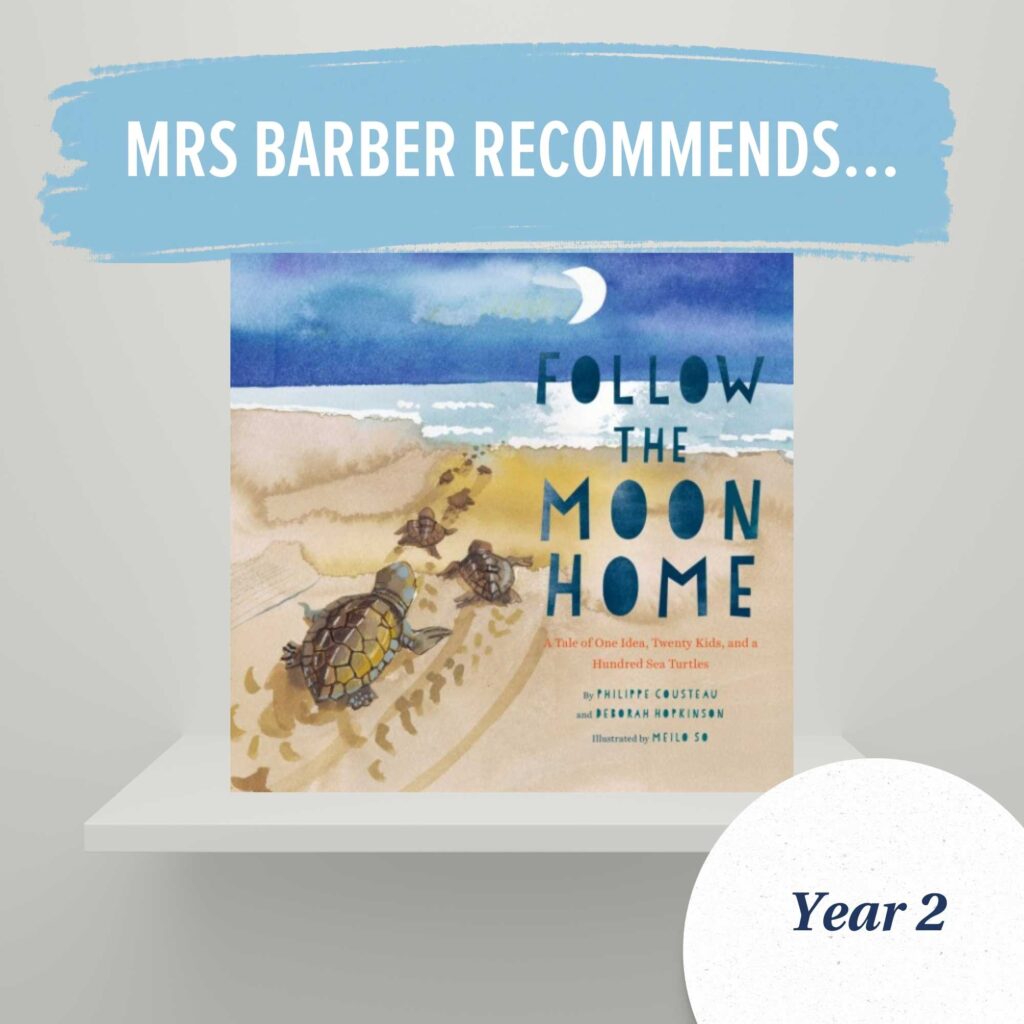
Year 2 – Mrs Barber recommends ‘Follow the Moon Home’ by Philippe Cousteau
This is a beautifully illustrated book, focusing on a girl who moves to a new town and identifies a chance to help its baby turtle population. Children of all ages enjoy this book, but it is especially good for Key Stage 1 children. I enjoy using it in class as it presents a host of writing opportunities.
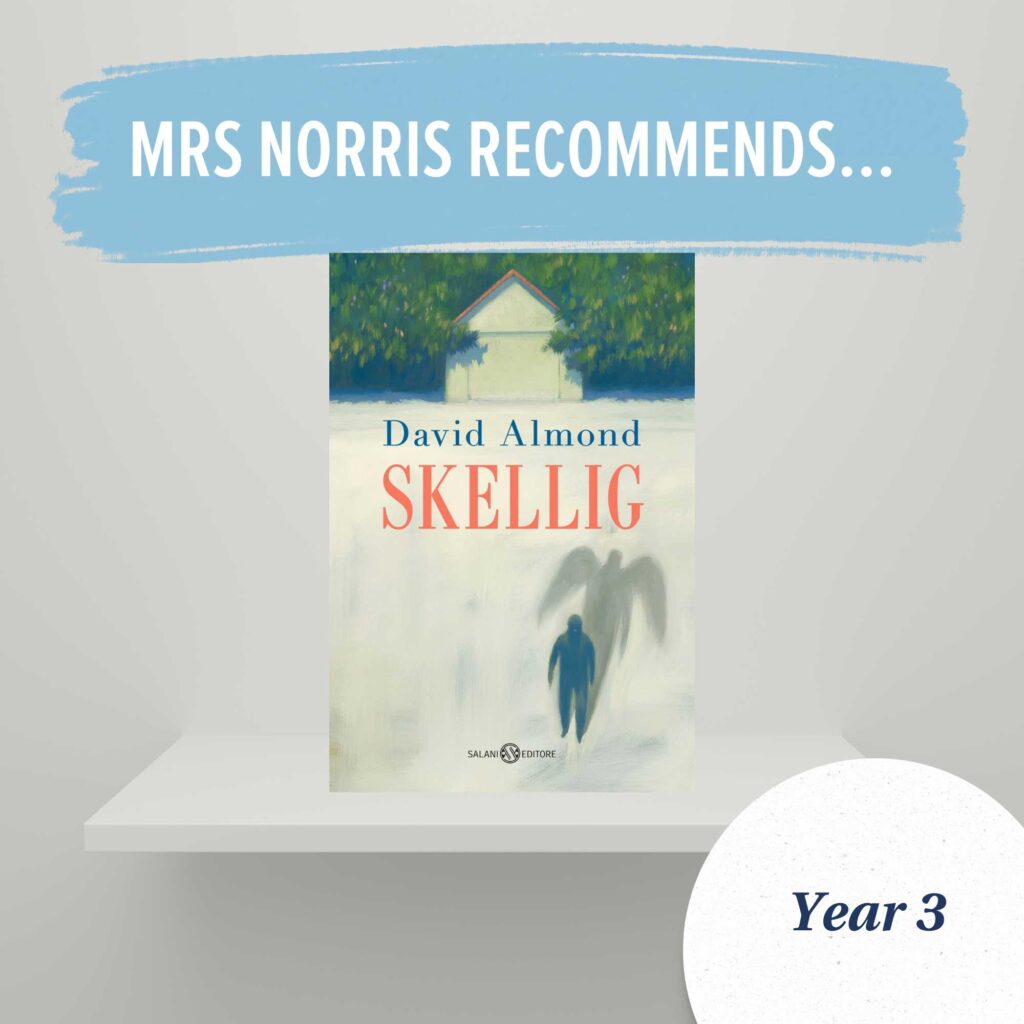
Year 3 – Mrs Norris recommends ‘Skellig’ by David Almond
An incredible and profound book to read from the age of 7. It is a story of loss, sadness, friendship, love, faith and hope. A boy and his family move to a run-down house with a derelict garage. The boy, Michael, discovers a man or strange kind of beast lying in the garage, eating whatever moves near him, and they form a strong bond. With the realisation that the garage is soon to be knocked down, Michael and his newly found friend, Mina, carry Skellig out into the light. Michael’s world changes forever when he discovers that Skellig is an angel.
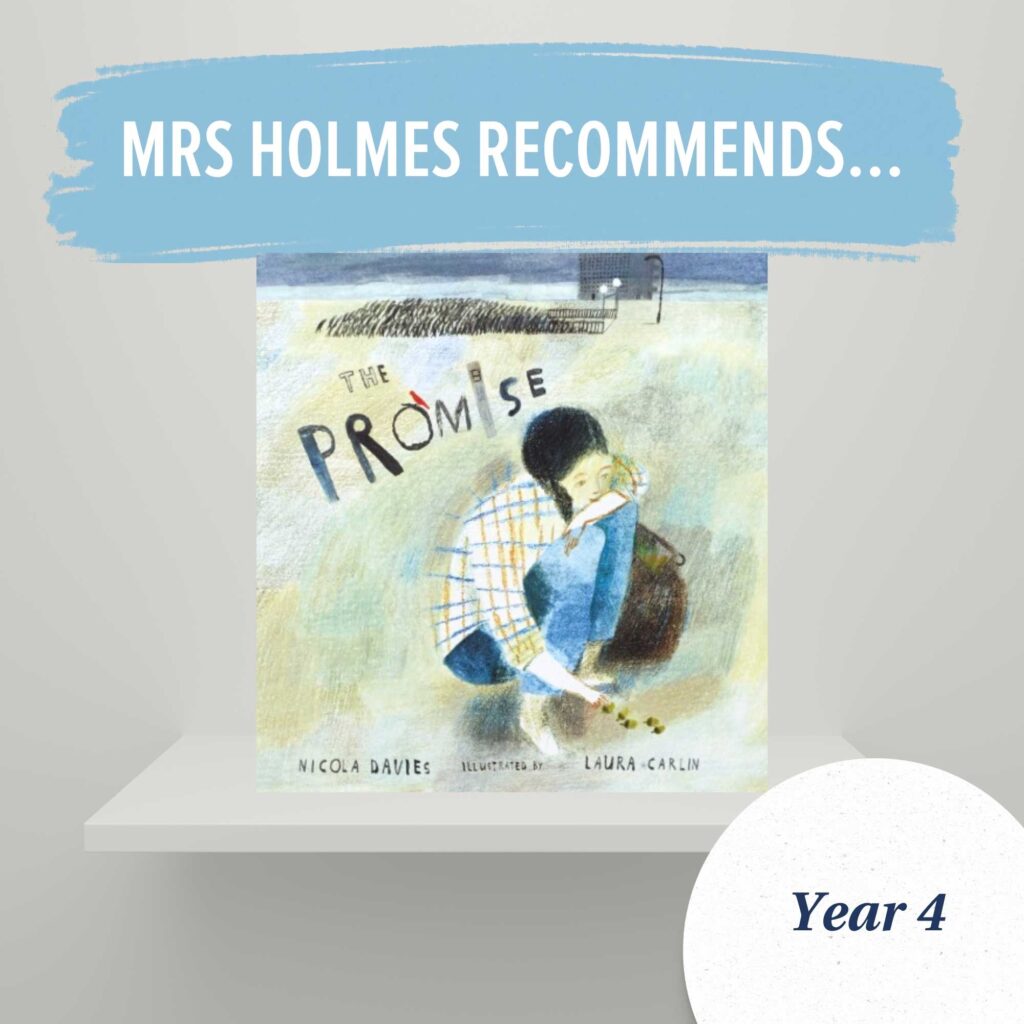
Year 4 – Mrs Holmes recommends ‘The Promise’ By Nicola Davies
This book starts in a mean street in a mean city, where a girl tries to snatch an old woman’s bag. But she finds she can’t have it without promising something in return – to “plant them all”. When it turns out that the bag is full of acorns, the girl embarks on a journey that changes her own life and the lives of others for generations to come. A remarkable book, this story is poetic and profound. Like all fables and fairy tales, the simplicity of the narrative serves to elevate the themes – the restorative power of nature, individual responsibility and the connectedness of living things. There’s so much more to explore in the artwork too.
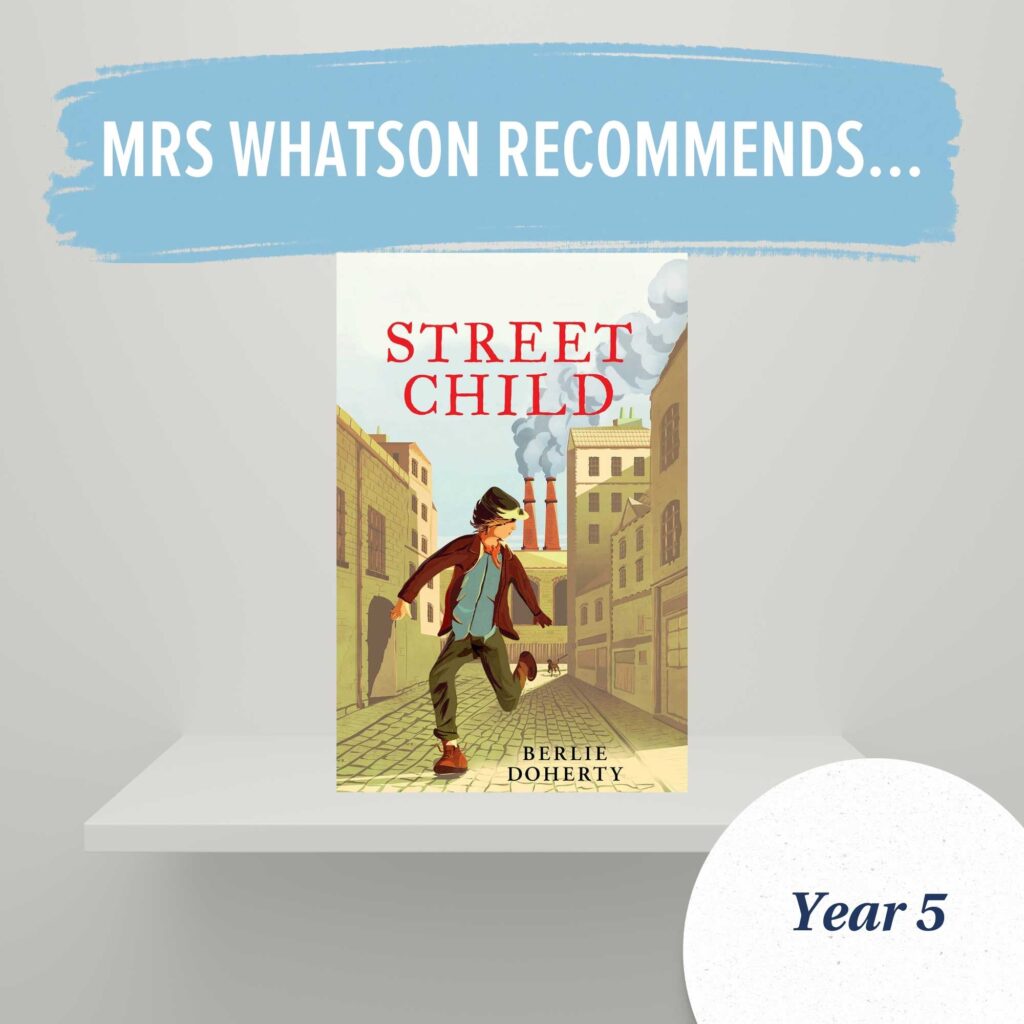
Year 5 – Mrs Whatson recommends ‘Street Child’ by Berlie Doherty
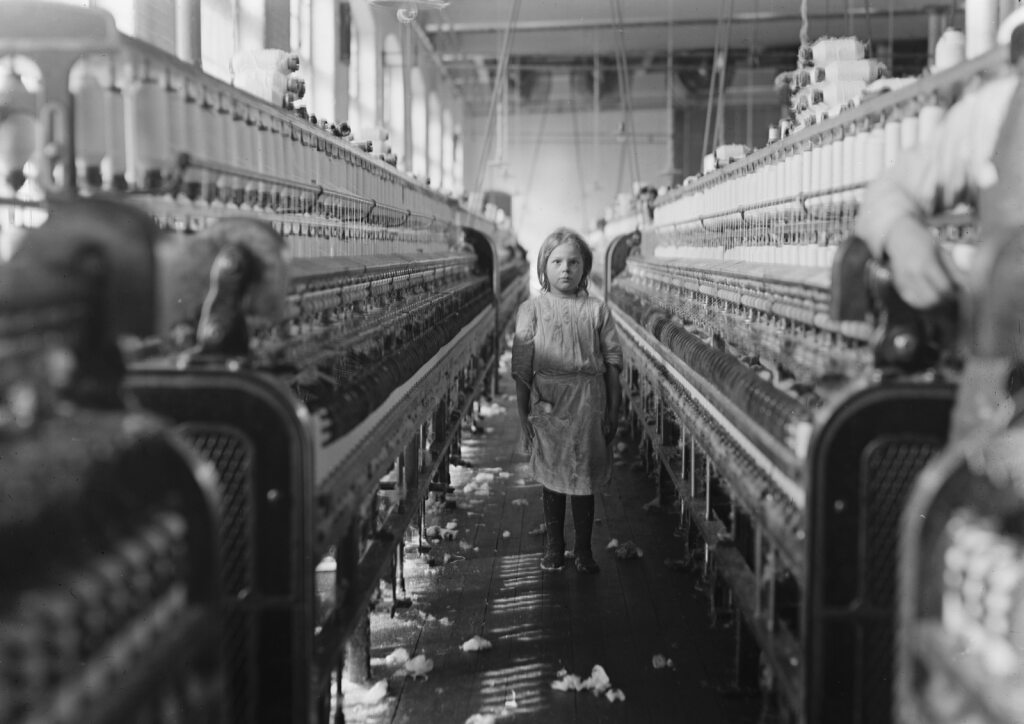
Loosely based on a true story, this is the inspirational tale of a poor boy fighting for survival on the grim streets of Victorian London. Full of suspense, the novel is a gripping read that will captivate children and teach them an array of vocabulary, as well as show them how life has changed for children over the decades. The story also links to the great charity work of Doctor Barnardo.
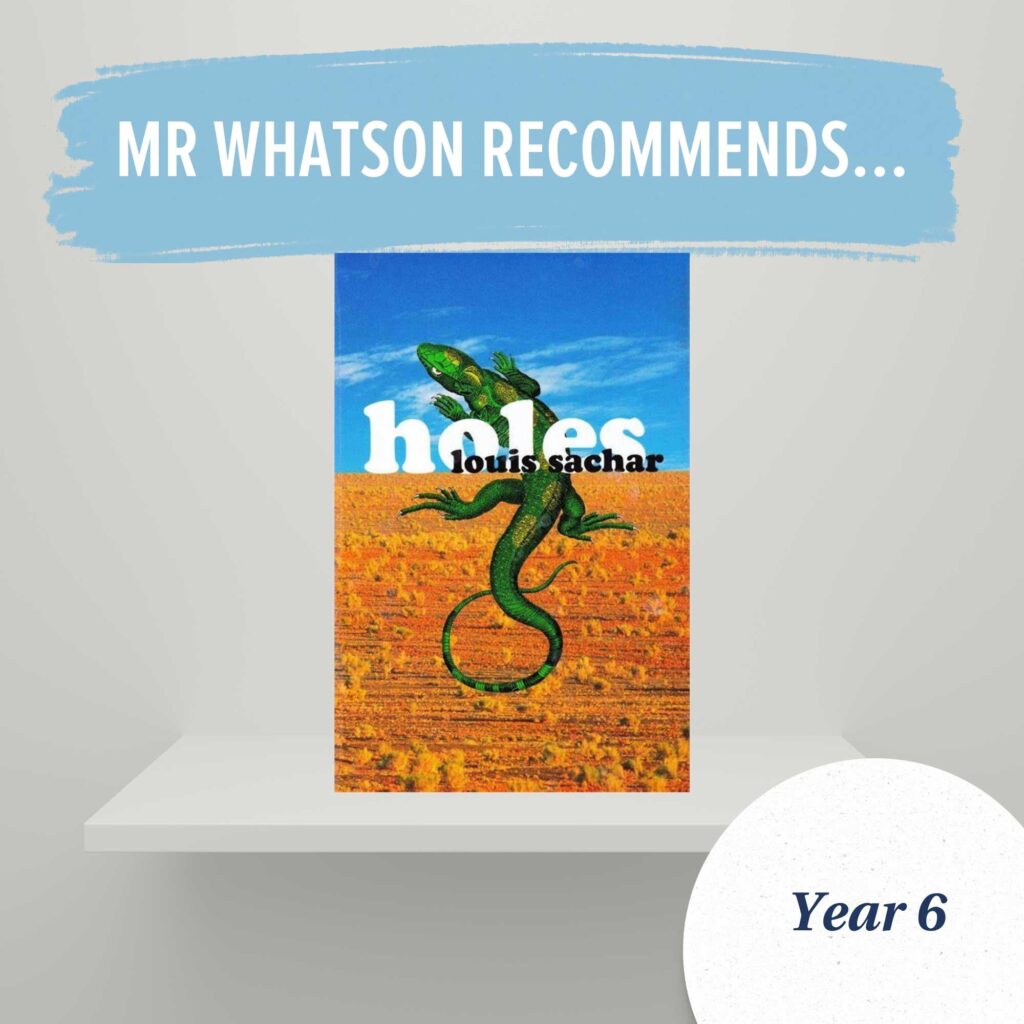
Year 6 – Mr Whatson recommends ‘Holes’ by Louis Sachar
A firm favourite in Year 6, Holes is a brilliantly crafted novel that captivates readers with its clever structure, humour and deeper themes. The story follows Stanley Yelnats, a boy who is sent to a mysterious juvenile detention camp where the boys are forced to dig holes every day. As the story unfolds, readers discover the reason behind the digging, and how past and present are intricately connected. It’s a fantastic read that encourages rich discussion around fate, friendship, justice and resilience – and one that hooks even the most reluctant readers.
Article by Mrs Holmes, Deputy Head of Prep